
Op-Ed: Bangladesh Can Redefine the Standards for Ship Recycling
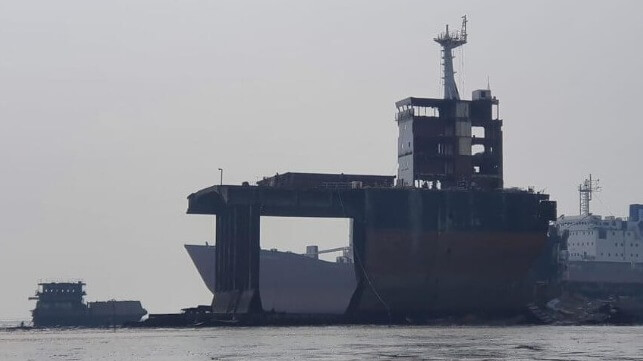
The entry into force of the Hong Kong International Convention for the Safe and Environmentally Sound Recycling of Ships (HKC) on 26 June 2025 marks a landmark shift in the governance of global ship recycling. It represents the culmination of a long and politically delicate process, one that required not only multilateral coordination but also precise mathematical thresholds. Yet beneath the celebratory messages lies a less visible truth: without Bangladesh’s ratification in June 2023, the Convention almost certainly would have failed to meet its final prerequisite and might have remained dormant for decades. More importantly, Bangladesh possessed significant diplomatic and commercial leverage at that moment—leverage it did not fully utilize. Today, however, the country still has a viable second path to reclaim strategic advantage, and that path is rooted in the Basel Convention and its Ban Amendment.
To understand Bangladesh’s pivotal role, it is necessary to revisit the HKC’s stringent entry-into-force requirements. Three cumulative conditions had to be met: ratification by at least fifteen States; representation of no less than 40 percent of global merchant shipping by gross tonnage; and combined recycling capacity—averaged over the preceding ten years—equivalent to at least 3 percent of the total fleet tonnage of the ratifying States.
While the first two criteria were broadly achievable, the third was a formidable barrier. Only a handful of States possess meaningful ship-recycling capacity, and among them, Bangladesh is indispensable. When Bangladesh and Liberia deposited their instruments of accession in June 2023, these thresholds were crossed for the first time: contracting States exceeded 22, global fleet representation rose above 45 percent, and combined recycling capacity finally reached the required 3 percent benchmark. The 24-month countdown to the 2025 entry-into-force date began.
Yet Liberia’s role, despite its status as the world’s second-largest open registry, did not meaningfully contribute to the third criterion. Liberia has almost no domestic ship-recycling capacity. Its accession added enormous fleet tonnage to the denominator of the recycling-capacity ratio without increasing the recycling numerator. This made the 3 percent requirement harder to achieve. For this reason, Liberia was widely advised not to ratify before Bangladesh. A premature Liberian ratification would have depressed the ratio even further, risking the permanent stagnation of the HKC. Bangladesh, by contrast, had no alternative: without its millions of annual light-displacement tonnes (LDT) of scrapping capacity, the Convention simply could not enter into force.
The global context further amplified Bangladesh’s significance. China, once the world’s largest ship-recycling nation, banned the import of foreign vessels for dismantling in 2019 as part of its environmental reforms. With China out of the market, one of the last large-capacity States capable of contributing to the HKC threshold disappeared from consideration. Pakistan, though active in shipbreaking, lacked specialized legislation, infrastructure, auditing mechanisms, and institutional readiness necessary to ratify or implement the HKC within the required two-year transition period. It was neither legally prepared nor politically positioned to fill the gap. This left only Bangladesh, as viable contributors—and among them, Bangladesh was the largest and the most essential for the calculation. Thus, the Convention’s fate rested squarely on Bangladesh’s decision.
Timing played a decisive role. The HKC’s third criterion evaluates a rolling ten-year average of recycling capacity, meaning that every year after 2023 would have introduced additional uncertainty. The global fleet grows annually, increasing the denominator. Bangladesh’s output, affected by domestic regulatory bottlenecks, fluctuates significantly, sometimes declining. Meanwhile, additional accessions by large flag States with no recycling capacity—such as Malta, Cyprus, or the Marshall Islands—would have further distorted the ratio. Combined, these factors could have made the 3 percent threshold mathematically unreachable after 2023. In policy terms, 2023 was the last feasible window for HKC activation.
This reality gave Bangladesh substantial bargaining power. It could have demanded transition financing, yard-upgrade packages, investment commitments for hazardous-waste facilities, or preferential recognition under the EU Ship Recycling Regulation. It could have secured for Bangladesh adequate international support for Treatment, Storage and Final Disposal (TSDF) Facilities and health-and-safety infrastructure. It could have negotiated staged implementation or revenue-sharing mechanisms tied to compliance. Yet Bangladesh exercised none of these options. Domestic political constraints, bureaucratic fragmentation, lack of consultation of relevant national experts and limited awareness of the leverage inherent in its ratification diluted what could have been a transformative diplomatic opportunity.
Despite this lost moment, Bangladesh is not without recourse. The Basel Convention provides a second—and powerful—avenue for strategic bargaining. Under Basel’s legal framework, a ship destined for dismantling may be classified as “hazardous waste,” especially when moving from OECD to non-OECD States, triggering strict responsibilities for environmentally sound management. These responsibilities fall primarily upon exporting States and waste generators, such as ship-owners. Bangladesh can therefore reposition itself as a Basel-compliant receiving State, and legitimately require financial contributions from ship-owners to support environmentally sound recycling.
The rationale is rooted in Basel’s core principles: shared responsibility, the polluter-pays doctrine, and the obligation to ensure environmentally sound management. Ship-owners—especially those based in OECD countries—cannot export hazardous end-of-life vessels to a State lacking proper waste-management capacity. To gain access to Bangladesh’s enormous recycling infrastructure, they must demonstrate due diligence and, often, co-finance environmental safeguards. Bangladesh can operationalize this by imposing a compliance levy on incoming end-of-life ships, justified under Basel as necessary to meet environmental-sound-management obligations.
The economics are compelling. Bangladesh recycles roughly 2 million LDT annually, generating an estimated USD 770 million in output. A 5 to 10 percent Basel-aligned compliance levy would yield USD 38 to 77 million annually—enough to fund TSDF facilities, environmental monitoring systems, independent auditing, emergency-response infrastructure, and HKC-aligned yard upgrades. In other words, Basel provides both the legal justification and the financial mechanism to compensate for the missed HKC bargaining advantage.
To move forward, Bangladesh must adopt a strategic and legally coherent set of actions. First, it should establish a National Ship Recycling Environmental Compliance Fund, capitalized through a Basel-compliant levy on imported end-of-life vessels. Second, the country should rapidly designate and upgrade a cluster of yards for HKC-compliant operations, using the fund to finance physical infrastructure, worker-safety systems, and environmental-protection technologies. Third, Bangladesh must actively negotiate with European regulators, classification societies, and international financial institutions to secure recognition and support for its Basel-aligned upgrades. Fourth, it must integrate its Basel and HKC strategies into domestic law, creating a unified compliance framework that enhances transparency and investor confidence. Finally, Bangladesh should coordinate regionally with India and Pakistan, both HKC Parties, to develop a South Asian HKC-compliant recycling corridor that provides ship-owners with predictable capacity, regulatory clarity, and regional coherence.
Bangladesh was the sole and indispensable de-facto State whose ratification ultimately enabled the Hong Kong Convention to enter into force. That moment of leverage was not fully exploited. Yet the strategic window has not closed. The Basel Convention now offers Bangladesh a legally robust, structurally coherent, and economically practical pathway to reclaim—and extend—that lost ground. By aligning national regulatory reforms with Basel obligations, and by mandating meaningful co-investment from shipowners in safe and sustainable recycling infrastructure, Bangladesh can transform an unrealized opportunity into a lasting competitive advantage. Doing so would not only modernize and future-proof its ship recycling industry, but also deliver tangible environmental gains and reinforce Bangladesh’s leadership in the global circular maritime economy. As the world’s largest ship recycling State by capacity, Bangladesh is uniquely positioned to set the regional benchmark in South Asia—shaping standards, driving investment, and redefining its role from rule-taker to rule-setter in the next phase of global ship recycling governance.
Author’s Biography: Dr. Ishtiaque Ahmed is a Professor and Chair of the Department of Law at North South University, Bangladesh. A former Merchant Marine Engineering Officer, he holds a Doctor of the Science of Law (J.S.D.) degree from the University of Maine School of Law, USA, where he specialized in International Ship recycling laws and policy. He contributed to the drafting of Bangladesh’s Ship Recycling Rule 2025 (proposed) and revising Bangladesh Ship Recycling Act 2018 as the sole Legal Consultant. Dr. Ahmed is also a qualified Barrister of England, an active member of Chartered Institute of Arbitrators (MCIArb) in London and an Advocate of the Supreme Court of Bangladesh. His expertise lies at the intersection of maritime law, environmental regulation, and sustainable ship recycling practices. He can be reached at ishtiaque.ahmed@northsouth.edu.
The opinions expressed herein are the author's and not necessarily those of The Maritime Executive.